What is Asset Management?
Assets are anything with actual or potential value to an organization. They can be physical/tangible or non-physical/intangible assets. Examples of physical/tangible assets include: buildings, infrastructure, vehicles, machinery & equipment, cash & bank balances, investments (stocks & bonds). Non-physical/intangible assets include: software & databases, intellectual property, licenses & certifications, human capital, among others.
What exactly is asset management and why is it critical for sustainable development?
Asset Management is an organization's activity to realize value from its assets. As explained by The Institute of Asset Management, we are all asset managers. The last time you had your car serviced or decorated your house, you were managing an asset!
"Modern society is heavily reliant on physical assets in order to function. They play a critical role in sustaining human life, supporting economic growth, and providing security. Managing assets so they can provide products and services now and into the future is a core part of the discipline known as asset management." Asset Management - An Anatomy
Read more here: https://theiam.org/knowledge-library/asset-management-an-anatomy/
The Anatomy is part of a holistic set of knowledge resources provided by the IAM. It is a good introduction for people seeking to understand asset management. It was developed to provide an appreciation of asset management: what it is, what it can achieve, the scope of the discipline, and a description of the underlying concepts and philosophy. It also describes the knowledge, skills and attitudes that support it.
Source: The Institute of Asset Management (IAM)
Quote:
“Unless it is a thing of beauty, an asset is just a means to an end. In other words, value comes from assets - IF you treat them right. Assets can also quickly become liabilities (more later). Asset management is about using assets to deliver value and achieve the organization’s objectives.” Asset Management – An Anatomy, Published by The Institute of Asset Management.
Why this matters?
Assets by themselves do not create value. Their value depends on how well they are managed throughout their life cycle to deliver services and support organizational goals.
Example:
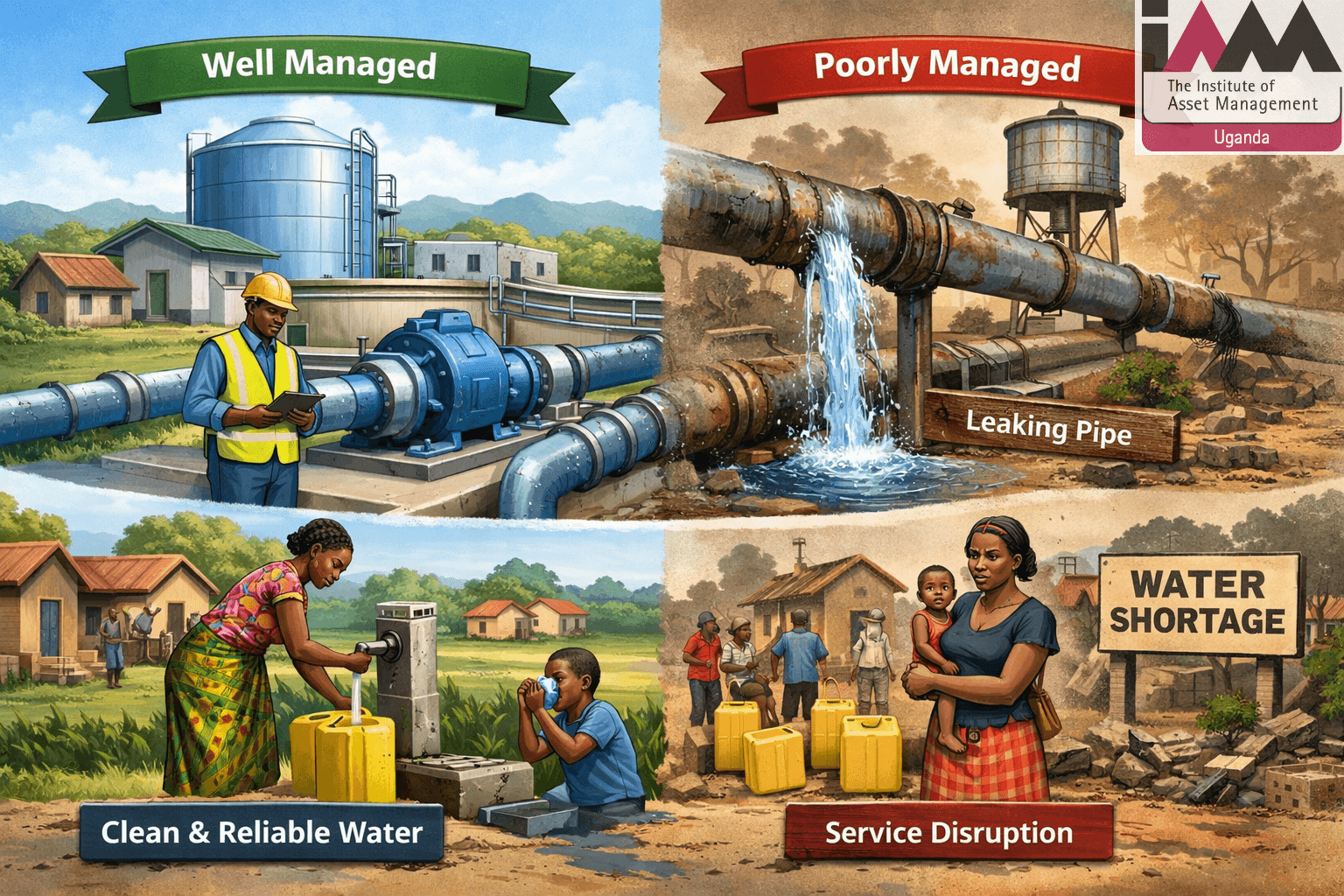
Consider a water supply system - Infrastructure such as pumps, pipes, reservoirs, and treatment plants are all valuable assets. When they are properly maintained and managed, they provide clean and reliable water to communities. However, when maintenance is neglected, pipes burst, pumps fail, and water supply becomes unreliable. The same assets that were meant to deliver value begin to create service disruptions, high repair costs, and public dissatisfaction.
This is why asset management is not just about owning assets, but about managing them effectively so they continue delivering value over time.